

I am someone who believes deeply in the spiritual dimension of life. Years ago, I began searching for a statue of Shakyamuni Buddha, a statue of Maitreya Buddha, and several other spiritual artworks for my own living space. I searched in many places, from traditional sculpture and handicraft centers in Vietnam to countless works I discovered online. I found many beautiful and skillfully crafted pieces. Yet somehow, I still could not find exactly what I was looking for. What I sought was not complexity or grandeur. I was searching for grace, serenity, purity, and a sense of transcendence. I wanted a work of art that could evoke a feeling of peace before one even began to notice the details or techniques behind it. From that experience, a question gradually emerged: Why not try to create the work I had been searching for myself? That thought stayed with me for a long time. I hesitated many times, unsure whether I could truly transform the image in my mind into a work of art. But eventually, driven by a quiet and persistent calling — or perhaps a kind of guidance that I still cannot fully explain — I decided to begin.
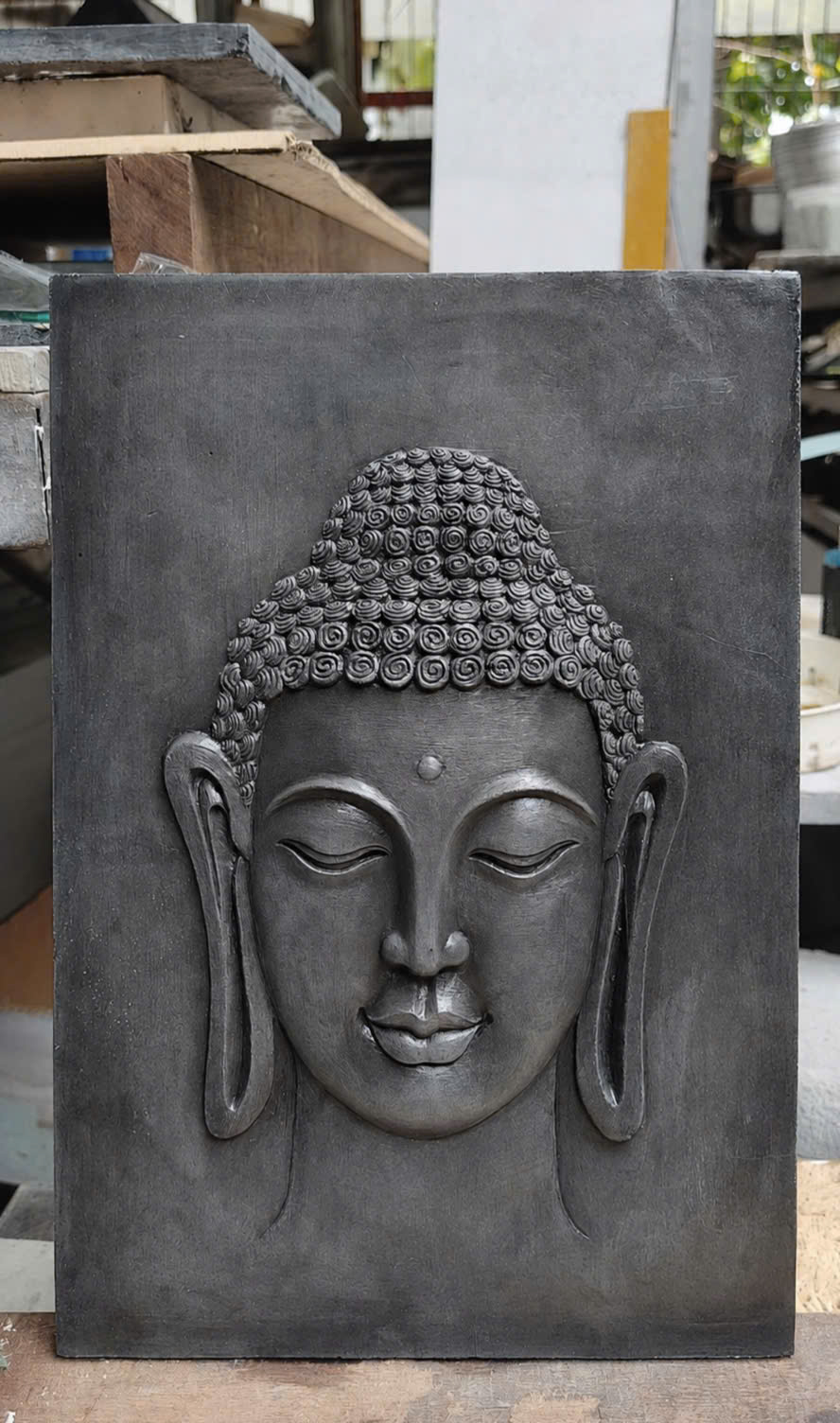
And I began with sculpture. When creating the image of Shakyamuni Buddha, I studied the many ways the Buddha has been represented across different cultures and historical periods. Each tradition has its own beauty and artistic language. Yet I did not want my work to belong entirely to any single school or tradition. Instead, I chose a more universal and idealized approach: a face that is refined without appearing delicate, dignified without feeling imposing, serene yet still alive. Above all, I chose simplicity. My intention is to remove what is unnecessary and preserve what matters most: form, presence, and emotion. To me, the more minimalist a work becomes, the more carefully every line must be considered. A gently lowered gaze, the subtle curve of a cheek, or the slightest change in the shape of the lips can transform the entire presence of a face.
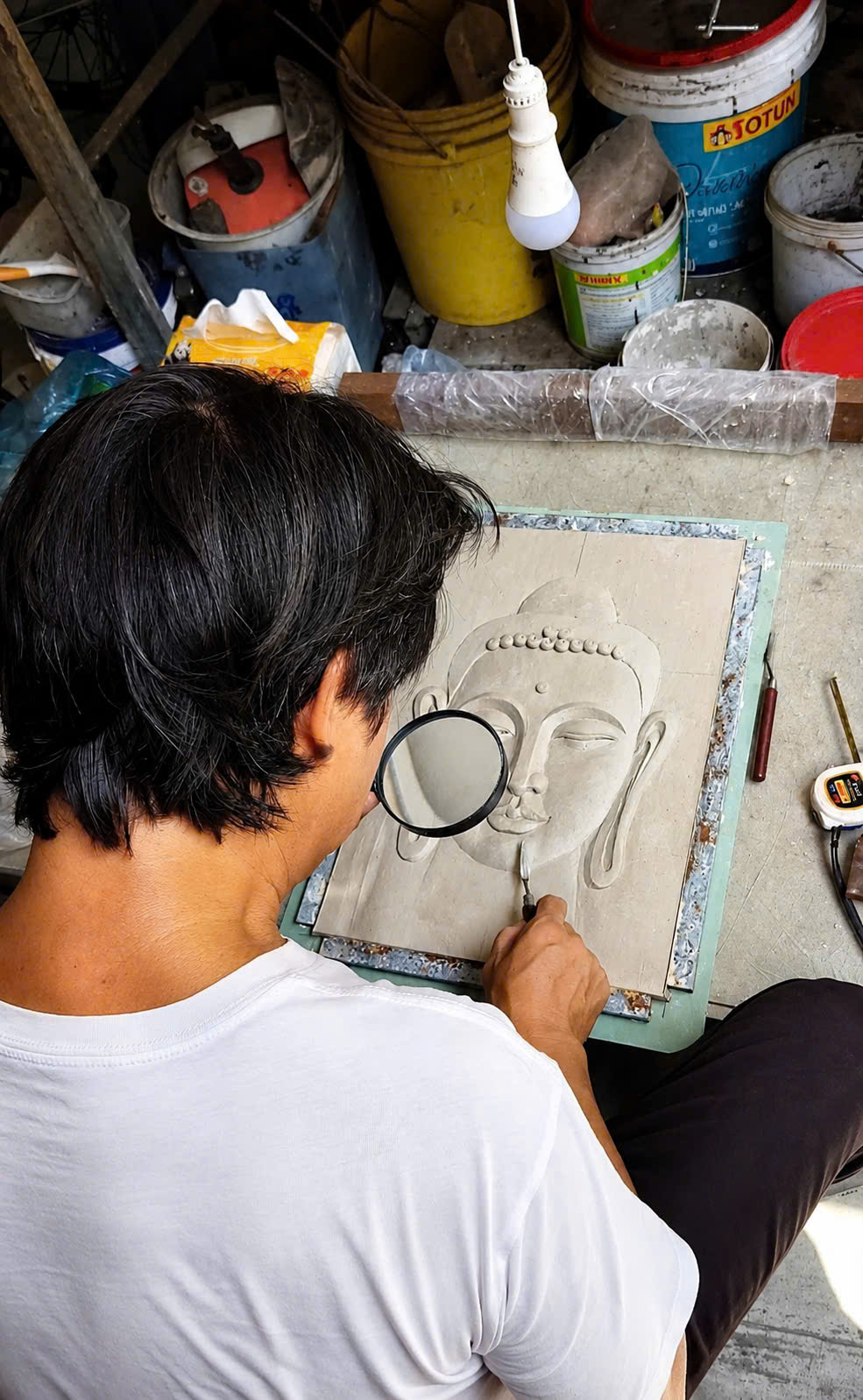
Rather than beginning with large freestanding statues, I chose to create Buddha Wall Art in the form of sculptural reliefs — relatively thin works that can be displayed on a wall like a painting while still retaining the depth and expressive presence of a Buddha Sculpture. Over time, this became my own approach to Buddha Relief Sculpture: bringing together the stillness of traditional spiritual imagery with a minimalist and contemporary artistic language.
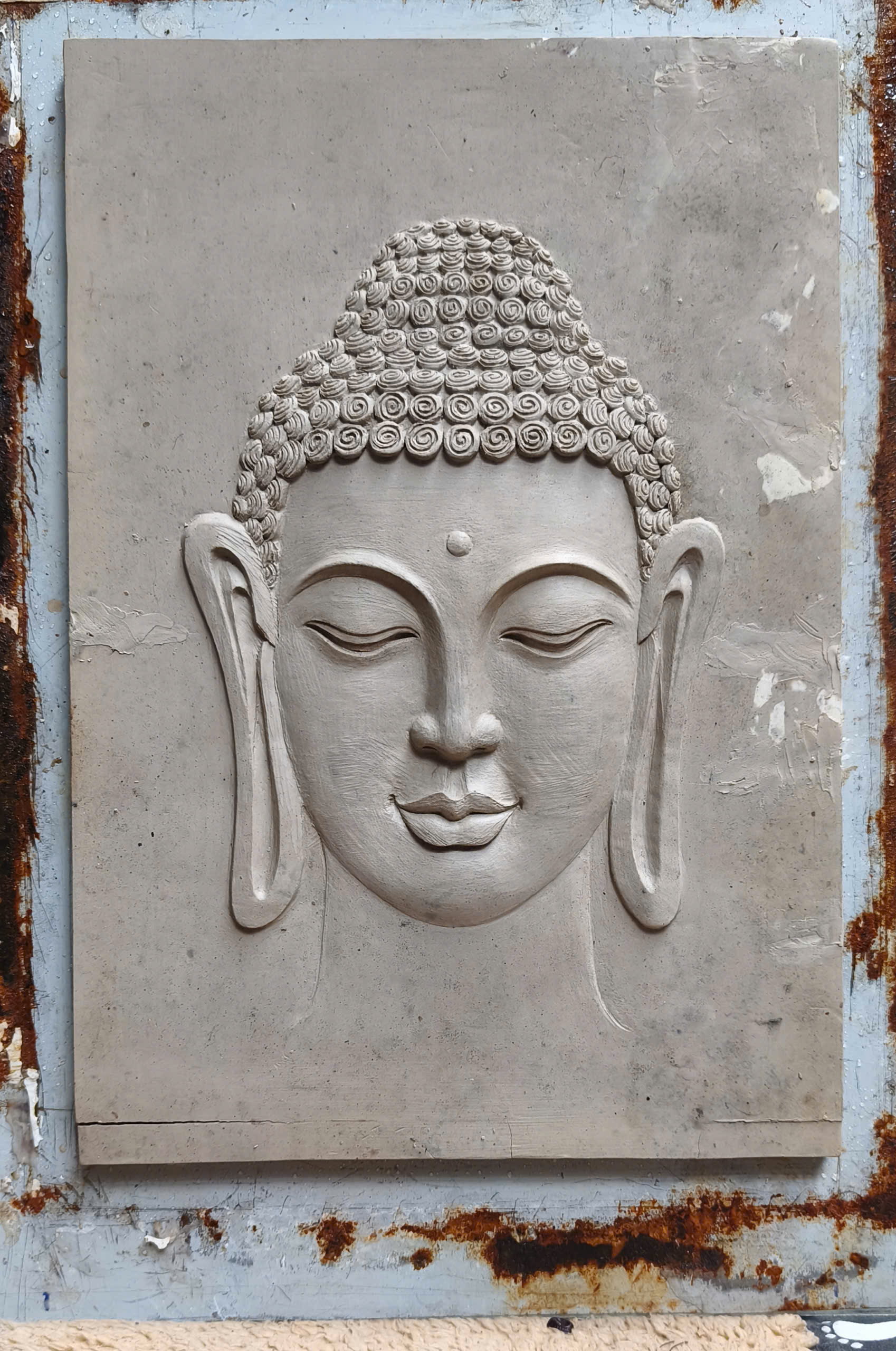
I am especially drawn to stone, GRC concrete, and mineral-based materials. They are strong and enduring, yet capable of remarkable refinement. Deep blacks, pure whites, natural stone greys, and quiet, timeworn tones have also gradually become part of my artistic language. Some colors are almost impossible to name. They shift subtly with the light and seem to belong more to feeling than to words.
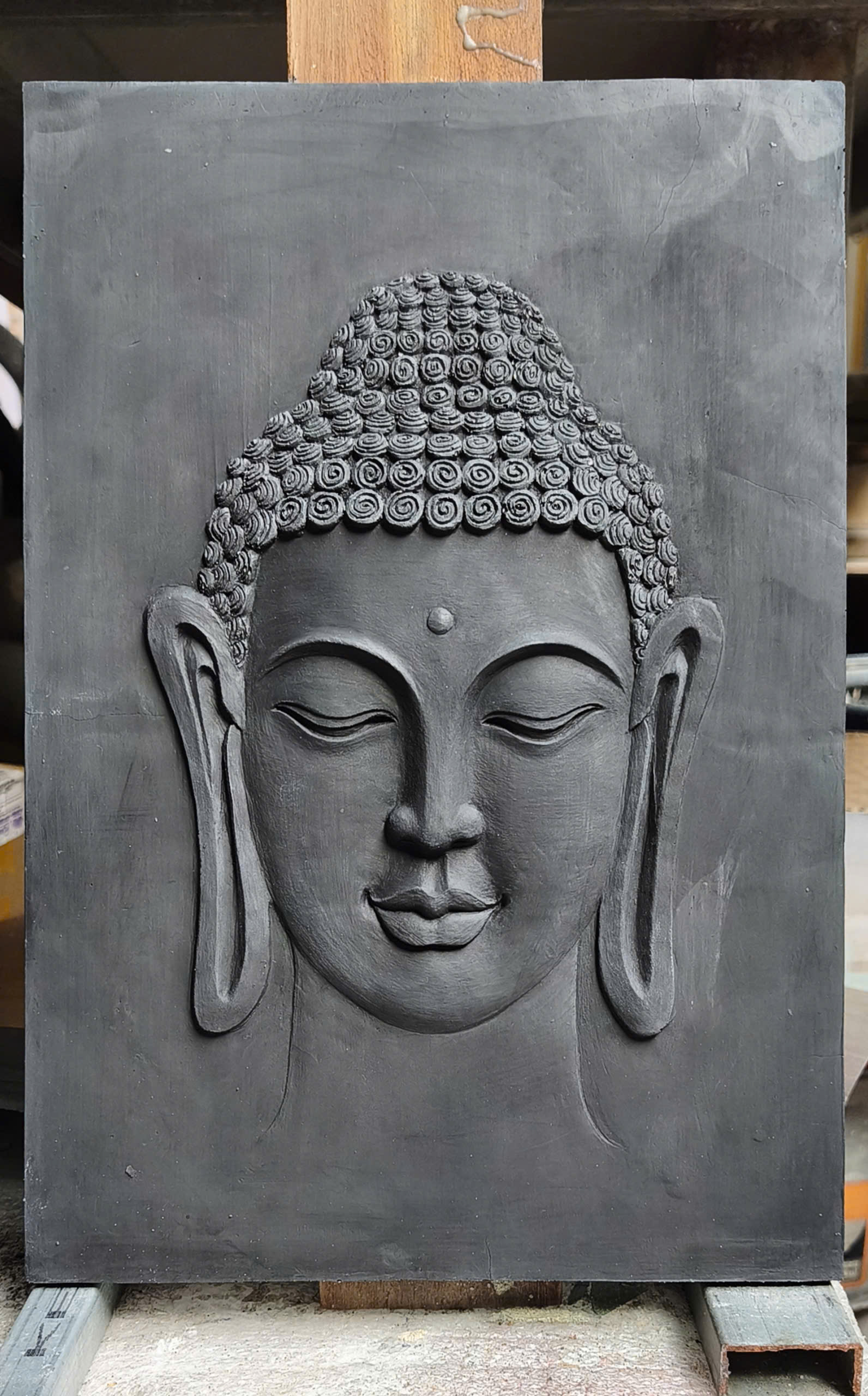
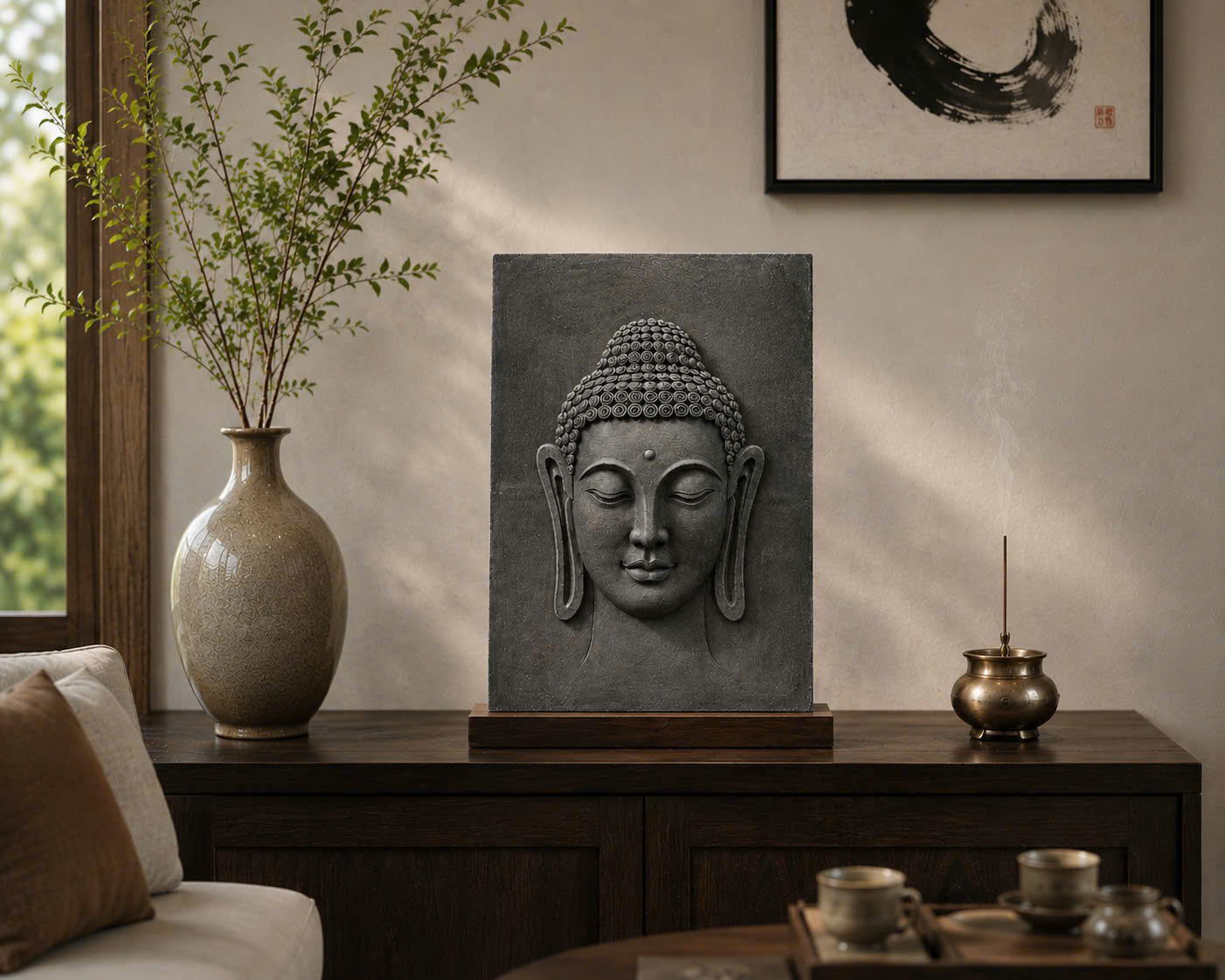
But what I truly hope to create is more than Buddha Wall Decor or a beautiful decorative object. I hope each work can create a moment of stillness — a moment in which someone who is tired may feel a little lighter, and someone surrounded by thoughts may become a little quieter. And amid the increasing pace of modern life, in a world of constant change where faith itself can sometimes begin to feel fragile, I hope the artwork can offer a quiet space for the mind to return to peace, compassion, and the deeper values of life. That is why I chose Spiritual Art. I hope these works can leave my studio and find the places where they truly belong: a home, a sacred place of worship, a meditation room, a yoga studio, a tea house, a spa, a resort, or an architectural space seeking a refined presence with spiritual depth. And beyond a particular place, I hope they find people who feel a connection with them: those drawn to meditation and spiritual life, those who appreciate minimalist art, architects and interior designers searching for a distinctive work to bring meaning and character to a space — or simply someone who happens to stand before a piece and feels the desire to stay with it a little longer. Wherever the work may find its home, and whoever it may find, I hope it does more than simply beautify a space. I hope it brings a feeling. Stillness. Grace. A little comfort. A little light. And a quiet space in which we can return to ourselves.
Bu Decor

